What's new in Elysium Energy
Every new release, feature and improvement — the same data you use to design a project, all the way through to financing it.
August 26, 2026
The equipment library goes live
The Elysium equipment library is now populated with 327 real components from 180 manufacturers across 26 countries — ready to search, compare and use in your designs. You can go from an empty design to a credible equipment shortlist without rebuilding the same research in a spreadsheet.
327 real components, 180 manufacturers
Browse solar panels, inverters, batteries, electrolyzers, hydrogen storage, fuel cells, diesel generators and diesel tanks — 119 batteries, 75 PV panels, 33 inverters, 20 electrolyzers, 20 hydrogen storage units, 20 fuel cells, 20 diesel generators and 20 diesel tanks. Search by manufacturer, model or country, and switch between table and card view depending on whether you are scanning specs or comparing hardware.
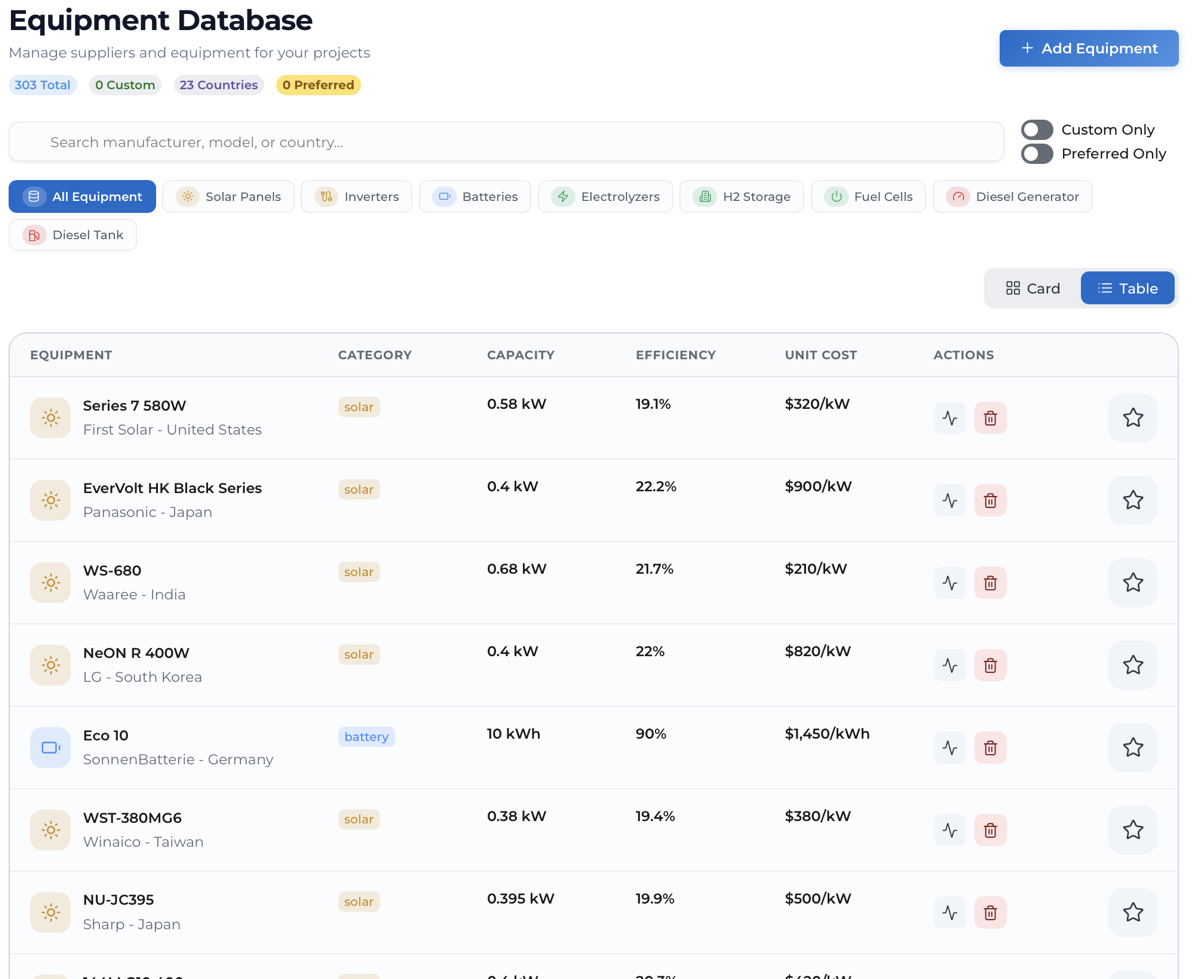
Table view — scan capacity, efficiency and unit cost across every category
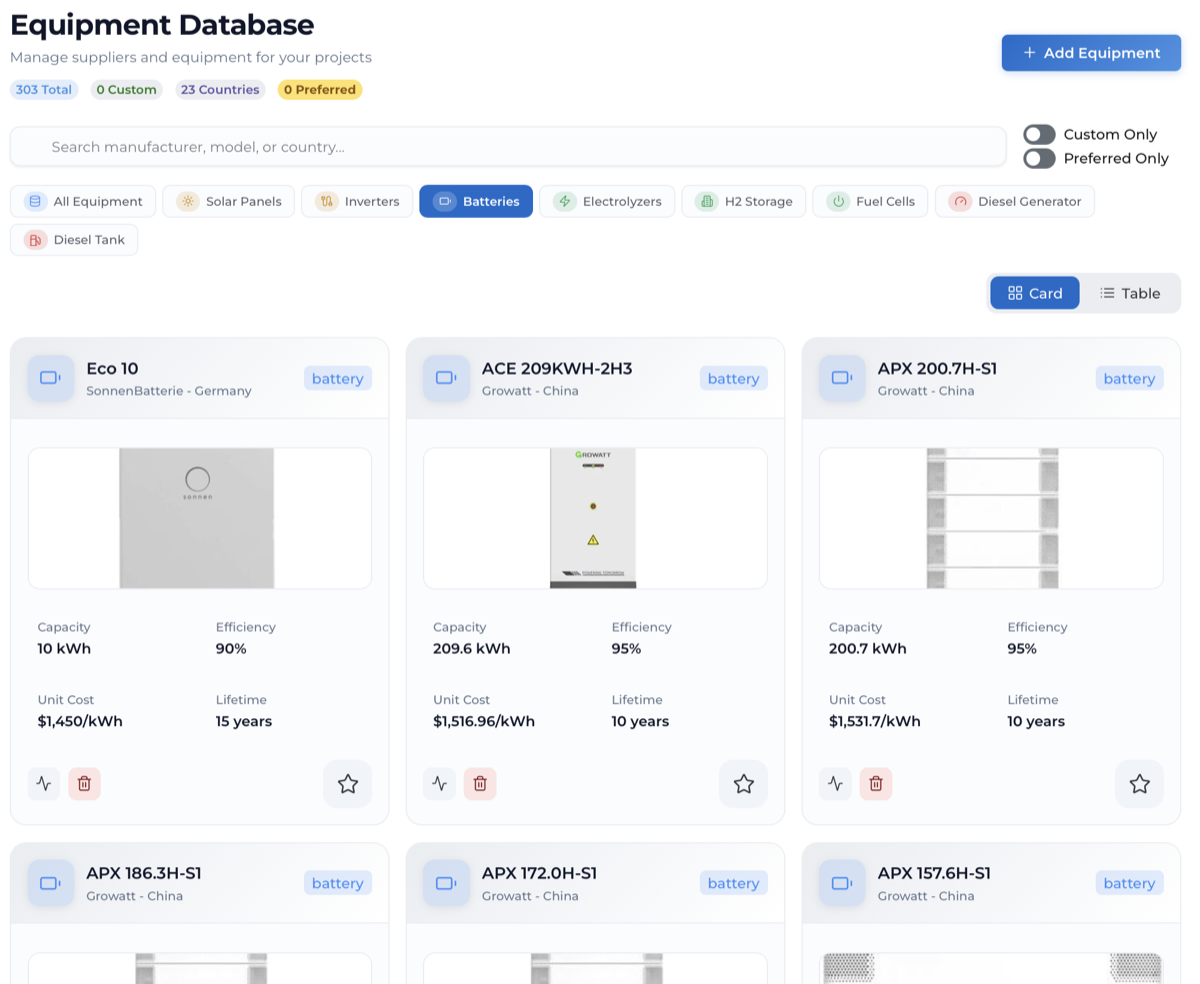
Card view — compare hardware side by side, filtered by category
Pricing has a place — and a source
A €/kW figure from a German distributor is not a ZAR figure from Johannesburg, and neither is a US benchmark. Elysium grounds equipment assumptions in their own markets: European equipment is sourced from European vendors, North American equipment from US vendors, and African equipment from vendors in Nigeria and South Africa. Every reference keeps its regional context and is refreshed quarterly. Solar is handled carefully too — when public pricing is missing, installed cost is derived from the module share of system cost with NREL benchmarks as the fallback, rather than lifted from a bundled PV-plus-battery kit that can quietly distort a pro-forma.
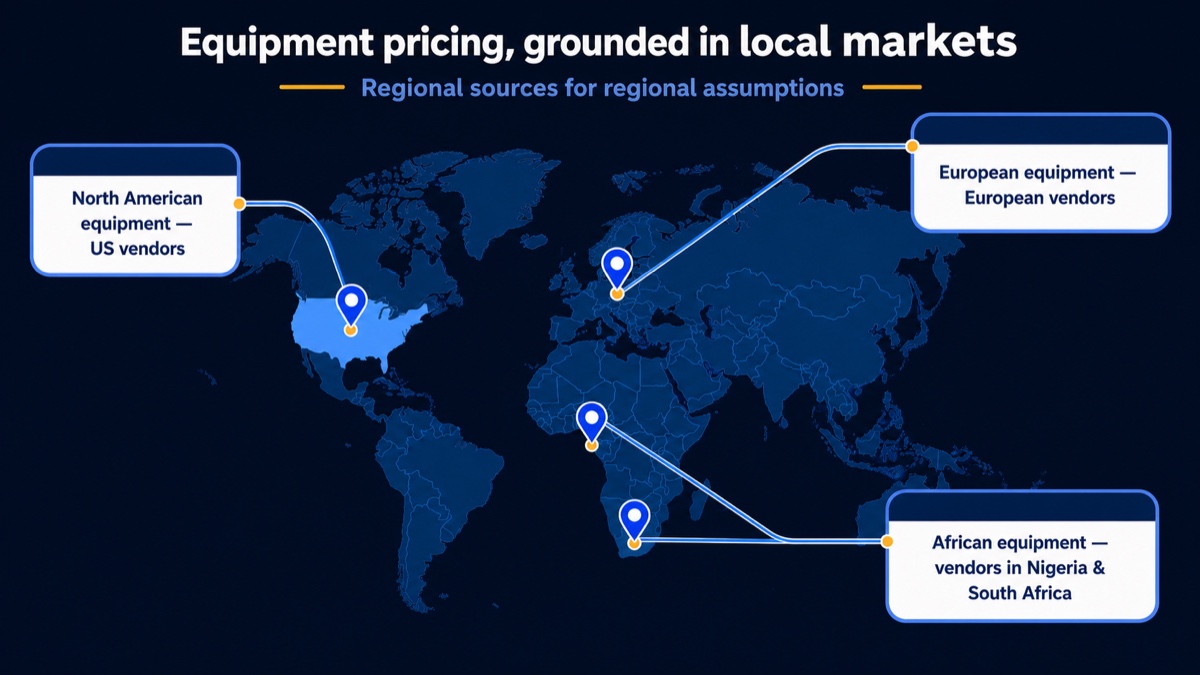
Preferred equipment and editable assumptions
Star the equipment you use most so it appears first when you build a design, and replace any reference cost with a supplier quote or project-specific input — the library is a starting point, not a constraint.
July 20, 2026
First public release
The first version of Elysium Energy is live — an AI-enabled platform that connects every phase and stakeholder of a distributed energy project, so the same data you use to design a project carries all the way through to financing it. No more rebuilding the model at every stage.
Advanced load library
Build an accurate demand profile for every hour of the year — start from pre-defined shapes, work in any unit or timeframe, and refine hour by hour with peak power and energy auto-calculated as you go.
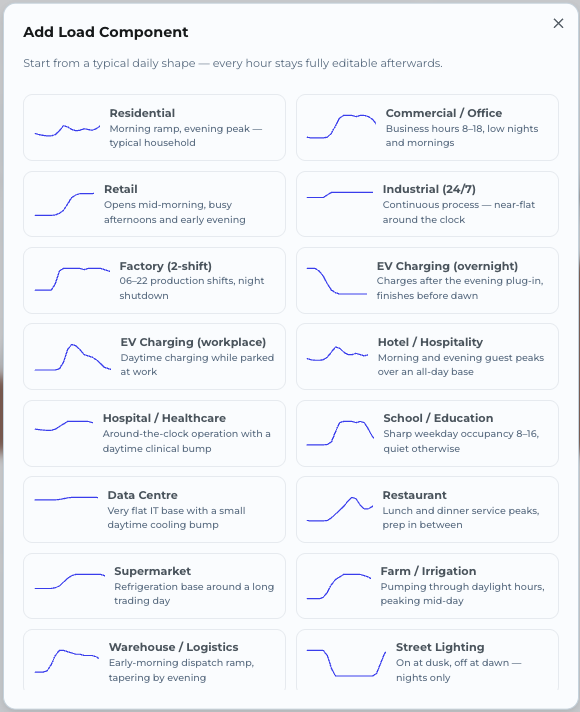
1 · Pick a pre-defined load shape
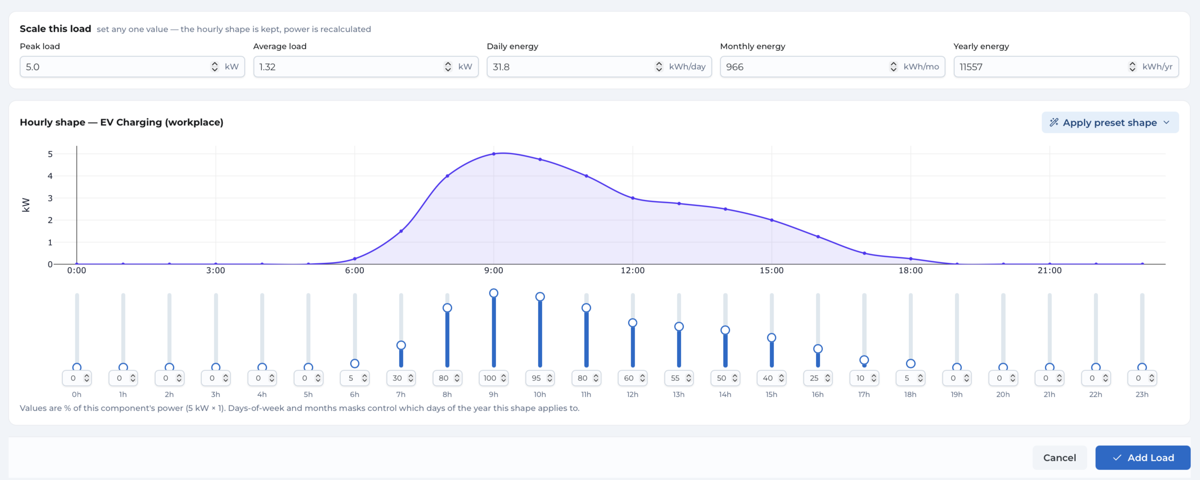
2 · Fine-tune it in the hourly editor
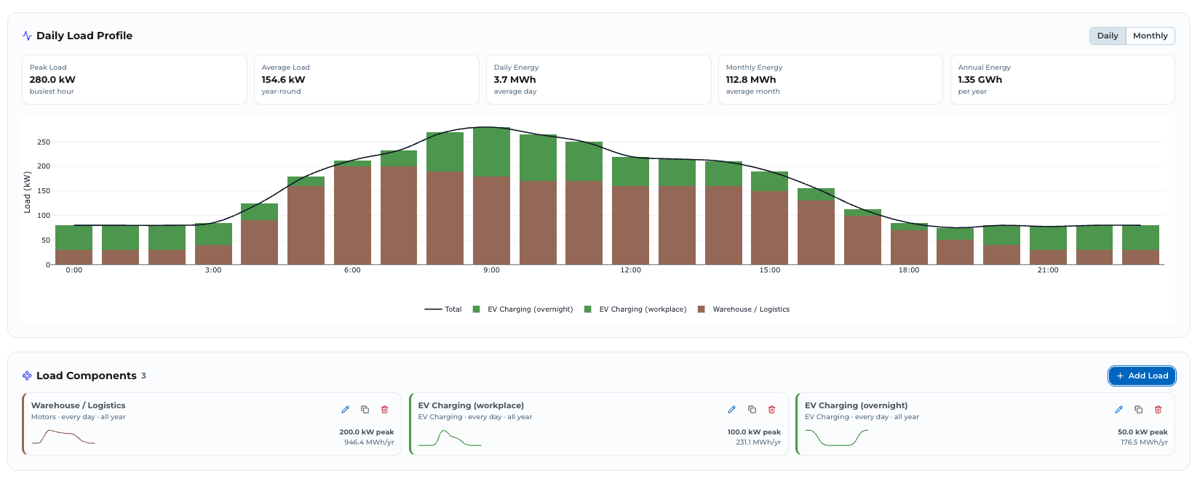
3 · Get the resulting daily load profile
Simple & Advanced design modes
A fast, guided flow for commercial teams — and full operational and financial control for engineers, with every equipment parameter editable right inside the design.
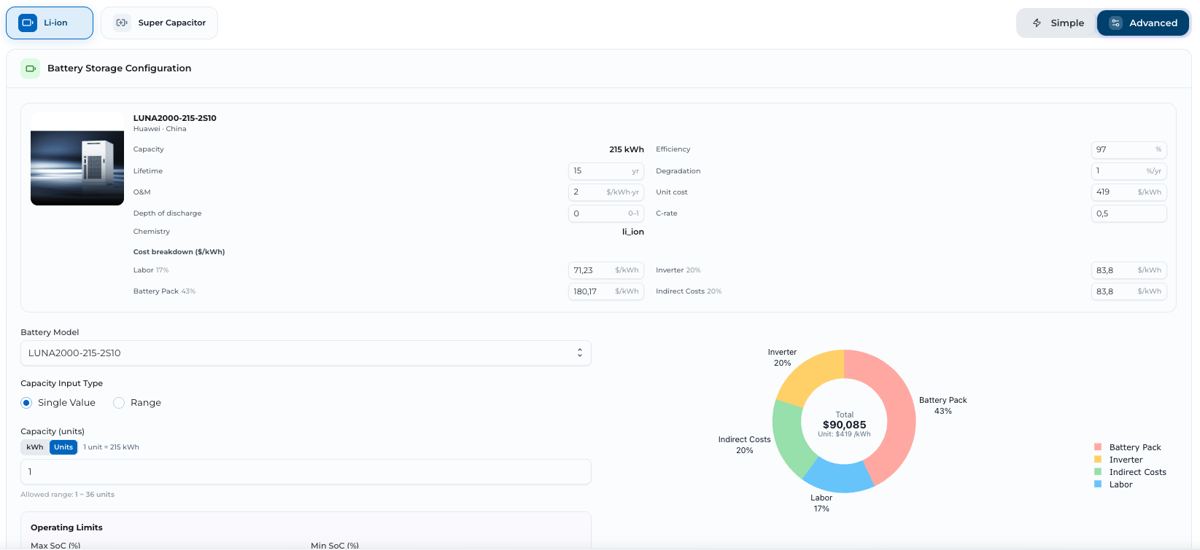
Fully integrated solar design
Draw on a map, arrange panels, run 2D / 3D shading analysis, design inverters, and size the array straight from the optimisation — all in one integrated studio.
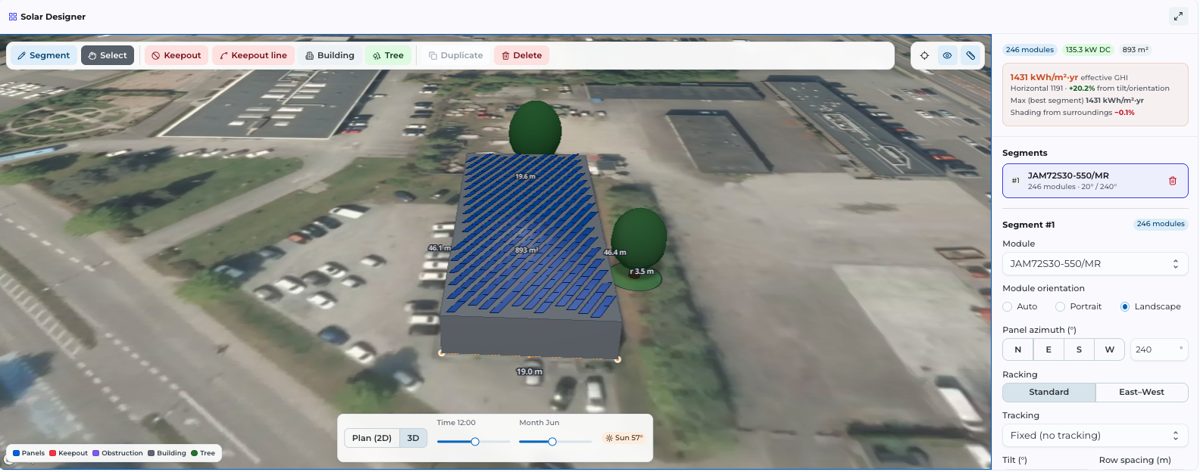
Faster from zero
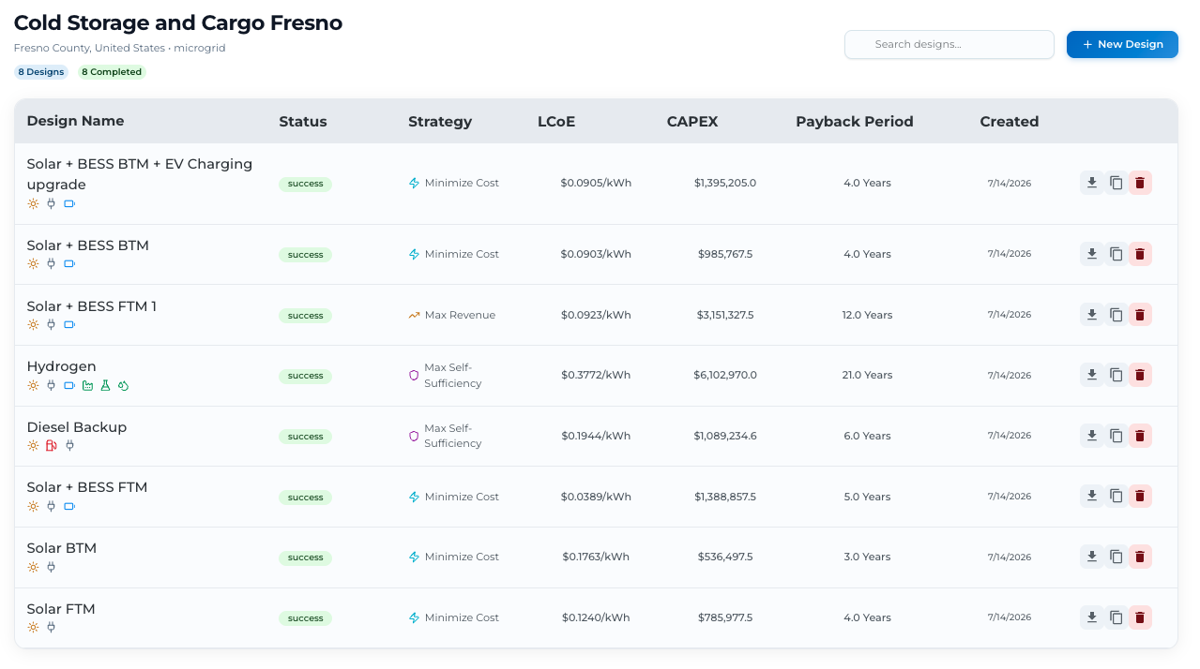
Switch between kW and equipment units instantly, skip the base design, and duplicate any design in one click to branch a new scenario — so you go from a blank canvas to a working model in minutes.
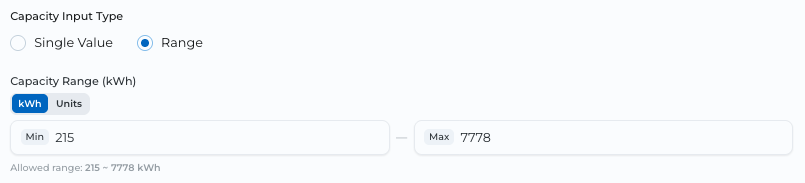
Enter capacity directly in kWh…
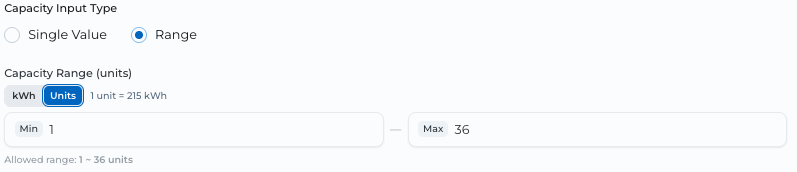
…or flip to equipment units in one click (1 unit = 215 kWh)